Quick Answer
Lake Kawaguchi, the main base for Mt. Fuji, is about 100–110 km from central Tokyo: roughly 1 hour 45 minutes to 2 hours via the Chuo Expressway to Kawaguchiko IC, with tolls of around ¥2,500–3,500 each way with ETC. A car makes it easy to move between the Five Lakes viewpoints at dawn, when Fuji is clearest; late October to February gives the best views. In the summer climbing season, private cars cannot drive the Fuji Subaru Line to the 5th Station, so check the dates before you go.
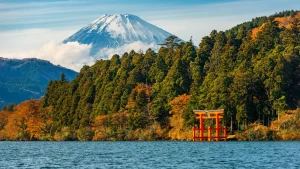
Mt. Fuji looks close from Tokyo on a clear winter day, and by car it nearly is. Two hours west of the city, the Fuji Five Lakes (Fujigoko) wrap around the north side of the mountain: five lakes, a dozen famous viewpoints and small onsen towns where you wake up to Fuji outside the window.
Public buses reach Lake Kawaguchi easily, but the best views come at sunrise and are spread around the lakes. With a car you can be at Lake Motosu for first light, at the Chureito Pagoda before the crowds and soaking in an onsen by mid-afternoon.
Tokyo to Mt. Fuji at a glance
| Distance | About 100–110 km from central Tokyo to Lake Kawaguchi |
| Drive time | 1 hour 45 minutes to 2 hours without traffic |
| Main route | Shuto Expressway → Chuo Expressway → Kawaguchiko IC |
| Tolls (one way) | Roughly ¥2,500–3,500 with ETC, including the Shuto Expressway |
| Best views | Late October to February, early morning |
| Ideal length | 1–2 nights; 3 nights to see all five lakes slowly |
The best route from Tokyo
Route 1: Chuo Expressway to Kawaguchiko IC (fastest)
Join the Chuo Expressway at Takaido IC (from the Shuto Expressway Route 4 if you are in central Tokyo). Continue west to Otsuki JCT and take the Fujiyoshida branch to Kawaguchiko IC. From the interchange it is five minutes to the lake.
The weak point is the Kobotoke Tunnel area west of Hachioji, a regular bottleneck on Saturday mornings and Sunday afternoons. Leave Tokyo before 7 a.m. at weekends.
Route 2: Tomei or Shin-Tomei to Gotemba (for Lake Yamanaka)
If you are staying at Lake Yamanaka, or combining Fuji with Hakone, take the Tomei or Shin-Tomei to Gotemba and then Route 138 north. It is a useful alternative when the Chuo Expressway is jammed.
Route 3: Shin-Tomei to the Shizuoka side
For Shiraito Falls, Fujinomiya and the southern 5th Station, take the Shin-Tomei to Shin-Fuji IC. It makes a good loop: up one side of the mountain, back down the other.
Check exact tolls for your date and vehicle on NEXCO Drive Plaza.
The Fuji Five Lakes by car
Lake Kawaguchi
The largest and busiest lake, and the easiest base. The north shore has the classic reflection views: Oishi Park (flower fields in summer, maple corridor in November) and the lakeside road towards Nagasaki Park. The south shore has most of the hotels and onsen.
Chureito Pagoda (Arakurayama Sengen Park)
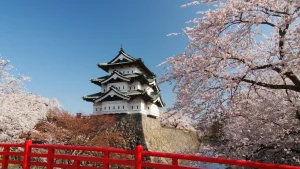
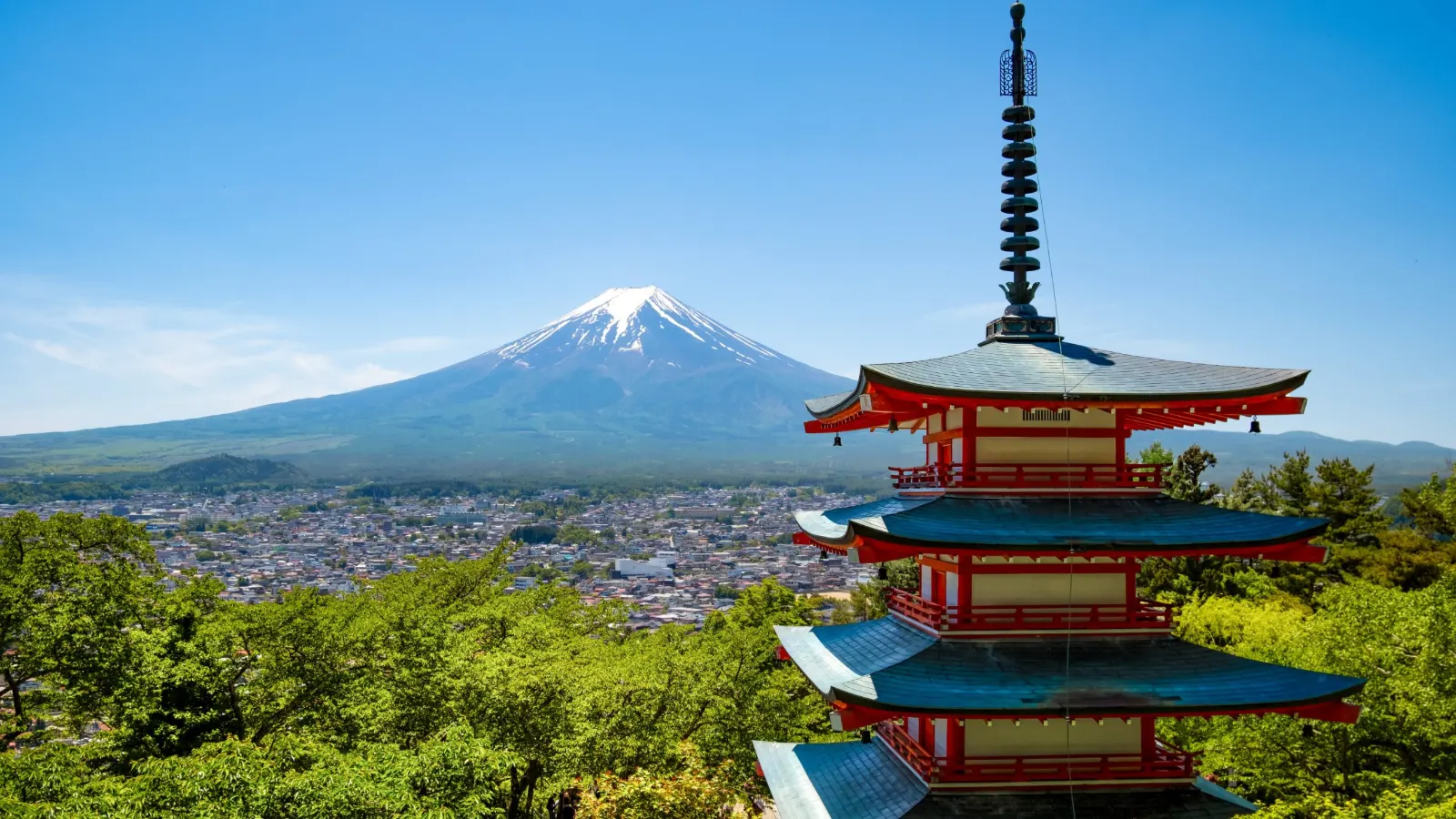
The five-storey pagoda with Fuji behind it is one of Japan’s most photographed scenes. It is about 400 steps up from the shrine. The car park is small, so arrive before 8 a.m., especially during cherry blossom season in April.
Oshino Hakkai
Eight clear spring-fed ponds in a small village between Kawaguchi and Yamanaka. Pretty but crowded by late morning. Park in the paid village lots, not on the narrow lanes.
Lake Yamanaka
The highest and most open of the lakes, with the Panorama-dai viewpoint above the south shore. Popular for cycling, camping and winter sunrises when Fuji turns pink (Diamond Fuji, when the sun rises or sets exactly over the summit, is visible here around certain dates in winter).
Lake Saiko and Iyashi no Sato Nenba
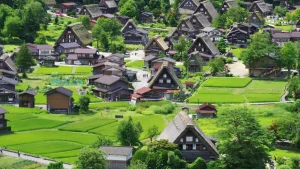
A quiet lake with a reconstructed village of thatched farmhouses, now craft shops, with Fuji above the rooftops. Nearby are the Fugaku Wind Cave and Narusawa Ice Cave in the Aokigahara lava forest.
Lakes Shoji and Motosu
The two smallest and calmest lakes. The Nakanokura Pass viewpoint above Lake Motosu is the view printed on the ¥1,000 note. In spring, the Fuji Shibazakura Festival nearby covers the fields in pink moss phlox (usually mid-April to late May).
Driving up Mt. Fuji: the 5th Station roads
- Fuji Subaru Line (Yamanashi side): a toll road from Kawaguchiko to the Fuji Subaru Line 5th Station at about 2,300 m. During the summer climbing season (roughly early July to 10 September) private cars are banned; park at the Fuji-Hokuroku car park and take the shuttle bus. Check the official Mt. Fuji climbing site for this year’s dates.
- Fujisan Skyline (Shizuoka side): leads to the Fujinomiya 5th Station, with similar summer restrictions.
- Winter: the upper sections close in winter, typically from late autumn until spring, depending on snow.
A two-day Mt. Fuji itinerary
- Day 1 morning: Leave Tokyo early on the Chuo Expressway. Stop at the Chureito Pagoda first.
- Day 1 midday: Oshino Hakkai, then lunch: try hoto, the thick local noodle stew.
- Day 1 afternoon: Drive the north shore of Lake Kawaguchi and check in to a Fuji-view ryokan.
- Day 2 sunrise: Lake Motosu or the Nakanokura Pass for the ¥1,000-note view.
- Day 2 morning: Lake Saiko, Iyashi no Sato and the lava caves.
- Day 2 afternoon: Lake Yamanaka and Panorama-dai, then back to Tokyo via Gotemba and the Tomei, or continue to Hakone.
Where to stay
- Lake Kawaguchi, south shore: most choice, many rooms with Fuji views and onsen.
- Lake Yamanaka: holiday houses, glamping and quieter hotels.
- Lakes Saiko and Motosu: campsites and small guesthouses for a slower stay.
Rooms with a Fuji view cost more but are worth it: the mountain is often clearest at dawn, before you leave the room.
Driving tips for the Fuji area
- Weather: Fuji is often hidden after mid-morning in spring and summer. Plan viewpoints for early in the day.
- Winter roads: Snow and ice are common around the lakes (about 800–1,000 m altitude) from December to March. Rent a car with winter tyres for this period.
- Crowds and etiquette: Popular photo spots in Fujikawaguchiko town get very busy. Park only in marked lots and never stop on the roadside for photos.
- Parking: Most viewpoints have free or cheap lots; Oshino Hakkai and the Chureito Pagoda fill early.
- Fuel: There are plenty of stations around Kawaguchi and Yamanaka, but few on the western lakes. Fill up before heading to Motosu.
How much does a Mt. Fuji road trip cost?
| Item | Typical cost |
|---|---|
| Expressway tolls (round trip) | ¥5,000–7,000 |
| Fuel (about 250–300 km) | ¥3,000–4,000 for a compact car |
| Parking and entry fees | ¥1,000–3,000 per day |
| Fuji Subaru Line toll (outside the summer restrictions) | A few thousand yen return |
| Fuji-view ryokan with meals | From about ¥18,000 per person per night |
For a fuller breakdown, see the Japan road trip cost guide.
Combine Fuji with Hakone or the Alps
The Fuji area links naturally with other drives. Hakone is about an hour south via Gotemba, the Izu Peninsula about two hours. Heading north-west, the Chuo Expressway continues towards Matsumoto and the Japan Alps, a natural next stop on a 7-day road trip. For a week or more on the road, a long-term car rental can be simpler than renting by the day.
Frequently asked questions
When is the best time to see Mt. Fuji?
From late October to February, on cold, dry mornings. In summer the summit is often hidden by cloud from mid-morning.
Can I drive to the top of Mt. Fuji?
No. Roads end at the 5th Stations (around 2,000–2,400 m). In the summer climbing season private cars are banned on these roads and you must use shuttle buses.
Is Lake Kawaguchi or Lake Yamanaka better as a base?
Kawaguchi has more hotels, restaurants and classic views. Yamanaka is quieter and better for outdoor activities and Hakone access.
Do I need winter tyres?
From December to March, yes. Roads around the lakes are often icy in the early morning even when there is no fresh snow.
Related: Driving in Japan Guide
Planning a longer road trip in Japan?
For stays of several weeks or more, a monthly rental can be simpler than booking a new car every few days.
Explore Long-Term Car Rental