Quick Answer
Hakone is about 90–100 km from central Tokyo: 1.5–2 hours via the Tomei Expressway to Atsugi IC and the Odawara-Atsugi Road, or 3 hours or more on busy weekends. Tolls are roughly ¥2,000–3,000 each way with ETC. Hakone's mountain roads are a gentle first taste of driving in Japan, and a car makes it easy to combine Lake Ashi, Owakudani and Sengokuhara in one or two days. Leave Tokyo early at weekends and check parking at your hotel before you book.
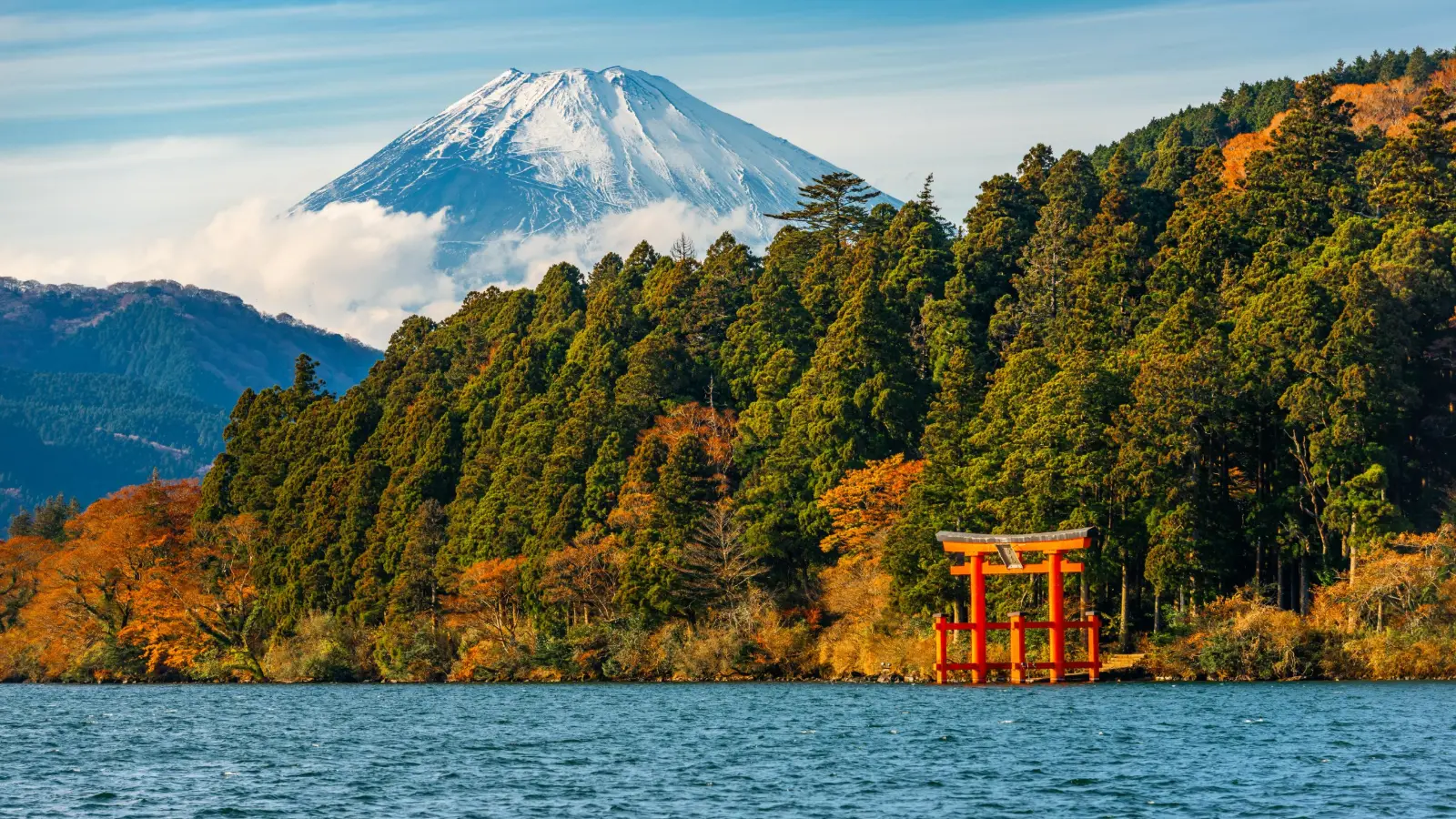
Hakone is the classic first road trip from Tokyo. In under two hours you swap the city for steaming volcanic valleys, a crater lake with a red torii gate standing in the water and, on a clear morning, Mt. Fuji filling the windscreen. The train is fine for a day trip, but a car is what lets you stay somewhere quiet, reach the viewpoints at sunrise and link Hakone with Fuji or the Izu Peninsula on the same trip.
This guide covers the best route from Tokyo, what you will pay in tolls and parking, the scenic roads worth the detour, where to stay and a relaxed two-day plan.
Tokyo to Hakone at a glance
| Distance | About 90–100 km from central Tokyo |
| Drive time | 1.5–2 hours without traffic; 3+ hours on busy weekends |
| Main route | Tomei Expressway → Atsugi IC → Odawara-Atsugi Road → Hakone-Yumoto |
| Tolls (one way) | Roughly ¥2,000–3,000 with ETC, including the Shuto Expressway |
| Best for | Onsen stays, Mt. Fuji views, a first taste of driving in Japan |
| Ideal length | 1–2 nights, or a base for 3–4 nights with day trips |
The best route from Tokyo
Route 1: Tomei Expressway and the Odawara-Atsugi Road (fastest)
From central Tokyo, take the Shuto Expressway to the Tomei Expressway at Tokyo IC, then follow the Tomei west to Atsugi IC. Switch to the Odawara-Atsugi Road (Odawara-Atsugi Doro) and continue to Hakone-Guchi, where Route 1 climbs into Hakone-Yumoto. This is the most direct way to reach Yumoto, Tonosawa, Miyanoshita and Gora.
The catch is the last few kilometres. Route 1 between Odawara and Hakone-Yumoto is one of the most congested roads in the region on weekends, holidays and in foliage season.
Route 2: Tomei to Gotemba (best for Lake Ashi and Sengokuhara)
If you are staying around Lake Ashi or Sengokuhara, stay on the Tomei (or the less crowded Shin-Tomei) to Gotemba IC, then take Route 138 over Otome Pass. This avoids the Yumoto bottleneck entirely and gives you one of the best Mt. Fuji views in the area at the top of the pass.
Route 3: Hakone Turnpike (most scenic)
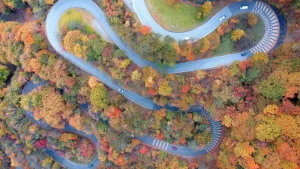
From Odawara, the Hakone Turnpike is a private toll road that climbs about 15 km of sweeping curves to the Daikanzan viewpoint above Lake Ashi. It costs a little more than the free roads but is far less congested, and the view of Fuji, the lake and Sagami Bay from the top is one of the best in Kanagawa.
For exact tolls on your date and vehicle, check NEXCO Drive Plaza. An ETC card from your rental company saves time at the gates and usually gets you the lower ETC rate.
Where to stop: Hakone highlights by car
Hakone-Yumoto and Tonosawa
The gateway onsen town, ten minutes from the end of the Odawara-Atsugi Road. Day-use hot springs, souvenir streets and riverside ryokan. Easy to reach, but parking near the station fills up by mid-morning.
Miyanoshita and the Fujiya Hotel
A small hillside town built around the Fujiya Hotel, which opened in 1878 and is one of Japan’s oldest Western-style hotels. Even if you are not staying, the café and the antique shops along the main road are worth a stop.
Hakone Open-Air Museum and Gora
Sculpture by Henry Moore and others set on terraced lawns with mountain views, plus a Picasso pavilion. Gora, just above, has the formal Gora Park garden and many of Hakone’s more modern ryokan.
Owakudani
The steaming volcanic valley at the top of the ropeway, famous for kuro-tamago (eggs boiled black in the sulphur springs). Parking is paid and fills quickly at weekends, so arrive before 10 a.m. Access is occasionally restricted when volcanic gas levels rise; check the Hakone town website before you go.
Lake Ashi, Hakone Shrine and Moto-Hakone
The crater lake is the centre of the area. Ride the sightseeing cruise between Togendai and Moto-Hakone, then walk to the torii gate of Hakone Shrine standing in the water. Come early or late in the day for photos without the crowds.
Old Tokaido Road and the Hakone Checkpoint
A cobbled stretch of the old Edo-era highway between Kyoto and Edo runs near Moto-Hakone, lined with cedars. The reconstructed Hakone Sekisho checkpoint and the Amazake-chaya teahouse make it an easy hour on foot.
Sengokuhara
Wide grasslands that turn silver with pampas grass from late September to November, plus the Pola Museum of Art and a quieter cluster of ryokan.
Scenic roads for Mt. Fuji views
- Ashinoko Skyline – a toll road along the ridge west of Lake Ashi with Fuji on one side and the lake on the other.
- Hakone Skyline – continues the ridge towards Nagao Pass; good for a sunset drive.
- Otome Pass (Route 138) – free, and one of the classic Fuji viewpoints on the way to Gotemba.
- Daikanzan (top of the Hakone Turnpike) – Fuji, Lake Ashi and Sagami Bay in one view.
Fuji is most often visible on cold, dry mornings from November to February. In summer it is frequently hidden by haze by mid-morning.
A relaxed two-day Hakone itinerary
- Day 1 morning: Leave Tokyo by 7 a.m. Drive the Tomei and Odawara-Atsugi Road, then the Hakone Turnpike to Daikanzan for the view.
- Day 1 midday: Lake Ashi cruise from Moto-Hakone, Hakone Shrine, lunch by the lake.
- Day 1 afternoon: Owakudani (late afternoon is quieter), then check in at a ryokan in Gora or Sengokuhara.
- Day 2 morning: Sunrise drive on the Ashinoko Skyline, then the Open-Air Museum when it opens.
- Day 2 afternoon: Miyanoshita and lunch, a final onsen in Yumoto, and drive back after 2 p.m. or after dinner to avoid the return rush.
With more time, continue to Mt. Fuji and the Five Lakes via Gotemba (about one hour) or south to the Izu Peninsula.
Where to stay
- Hakone-Yumoto and Tonosawa: easiest to reach, lots of choice, busier.
- Miyanoshita and Gora: central for sightseeing, classic and design ryokan.
- Sengokuhara: quieter, more space, good for families and longer stays.
- Lake Ashi: best for Fuji views at dawn.
Most ryokan include dinner and breakfast. Confirm parking when you book: many have free guest parking, but some older inns in Yumoto use paid lots nearby.
Driving tips for Hakone
- Hairpins and buses: Route 1 above Yumoto is narrow with tight switchbacks and frequent buses. Use a low gear downhill rather than riding the brakes.
- Weekend traffic: Leave Tokyo before 7 a.m. or after 2 p.m. Avoid Golden Week, Obon and peak foliage weekends in November if you can.
- Fog and weather: Mountain fog is common, especially on the Skyline roads. Use your low beams and slow down.
- Winter: Snow and ice are possible on the higher roads from December to March. Ask your rental company for winter tyres if you are driving in that period; some toll roads close in snow.
- January 2–3: The Hakone Ekiden university relay uses Route 1, causing closures and heavy traffic.
- Parking: Most sights have paid lots (typically ¥500–1,000 per visit). Keep coins and small notes for unmanned machines.
How much does a Hakone road trip cost?
| Item | Typical cost |
|---|---|
| Expressway tolls (round trip) | ¥4,000–6,000 |
| Fuel (about 200–250 km) | ¥2,500–3,500 for a compact car |
| Parking | ¥1,000–3,000 per day |
| Toll roads (Turnpike, Skyline) | A few hundred to around ¥1,000 each |
| Ryokan with dinner and breakfast | From about ¥20,000 per person per night |
For a full breakdown of rental, tolls, fuel and parking across Japan, see the Japan road trip cost guide.
Staying longer: Hakone as a base
Hakone works well as a three- or four-night base. Gotemba outlet shopping, the Fuji Five Lakes, Atami and the Izu coast are all within about an hour. If you are planning a week or more around the region, a long-term car rental can work out simpler and cheaper than booking a new car for each leg.
Frequently asked questions
Is it better to drive or take the Romancecar to Hakone?
The Odakyu Romancecar is quicker for a simple day trip to Yumoto. Driving is better if you are staying overnight, travelling as a family, carrying luggage or ski gear, or want to combine Hakone with Fuji or Izu.
Can I see Mt. Fuji from Hakone?
Yes, on clear days from Lake Ashi, Otome Pass, the Ashinoko Skyline and Daikanzan. Your best chance is early morning between November and February.
Is driving in Hakone difficult?
The expressways are easy. The mountain roads are narrow with hairpins, but well surfaced and signposted in English. Drive slowly, give way to buses and avoid peak weekends.
What do I need to drive in Japan?
An International Driving Permit issued under the 1949 Geneva Convention, or for licences from Switzerland, Germany, France, Belgium, Monaco and Taiwan, an official Japanese translation. See our Driving in Japan guide for the details.
Related: Driving in Japan Guide
Planning a longer road trip in Japan?
For stays of several weeks or more, a monthly rental can be simpler than booking a new car every few days.
Explore Long-Term Car Rental