Quick Answer
Excluding accommodation, a self-drive trip in Japan typically costs about ¥3,000–6,000 per travelling day in tolls, fuel and parking for a compact car, plus the rental. As totals for driving costs only, budget roughly ¥29,000–49,000 for 7 days, ¥61,000–99,000 for 14 days and ¥99,000–163,000 for a month (about 3,000 km). The rental is the biggest variable: at Monthly GO, a compact costs ¥69,000 for 30 days, or ¥75,900 including tax. Figures checked November 10, 2026.
Japan has a reputation for being expensive to drive in, mostly because of expressway tolls. In practice, a road trip is often cheaper than you would expect, especially for two or more people, and it can cost less than rail passes plus taxis and buses once you leave the cities. Here are realistic 2026 numbers for every part of the budget, and sample totals for trips of different lengths.
Costs at a glance (compact car)
| Item | Typical cost |
|---|---|
| Car rental, monthly plan | From ¥69,000 per 30 days for a compact at Monthly GO (¥75,900 including 10% tax), about ¥2,300 a day before tax |
| Car rental, daily | Usually much higher per day than a monthly plan, and higher in peak season |
| Expressway tolls | Roughly ¥2,000–3,500 per 100 km, plus city expressways |
| Fuel | About ¥11 per km in a compact car (regular petrol about ¥170 per litre, autumn 2026) |
| Parking | ¥0 at most rural sights; ¥1,000–3,000 a day in towns; ¥1,500–3,000 a night at city hotels |
| ETC card rental | ¥200 a day (excl. tax) at Monthly GO, subject to availability; varies by company |
Car rental: daily vs monthly
Rental is the biggest variable. Daily rentals from airport and station counters are convenient for a few days but add up fast over a long trip, especially in Golden Week, summer and New Year.
For two weeks or more, compare long-term rental. Monthly GO publishes fixed 30-day prices by vehicle class; these are the main classes for road trips (prices exclude 10% consumption tax unless shown):
| Vehicle class | 30 days (excl. tax) | 30 days (incl. 10% tax) | Per day (excl. tax) |
|---|---|---|---|
| Kei mini | ¥36,000 | ¥39,600 | ¥1,200 |
| Compact | ¥69,000 | ¥75,900 | ¥2,300 |
| Toyota hybrid compact | ¥87,000 | ¥95,700 | ¥2,900 |
| Toyota minivan | ¥105,000 | ¥115,500 | ¥3,500 |
| Touring wagon (4WD) | ¥114,000 | ¥125,400 | ¥3,800 |
Source: Monthly GO plans and pricing, checked November 10, 2026. Fuel is not included (return the car full), standard plans include 3,000 km per 30 days, and you reserve a vehicle class rather than a specific model. Check the page for current prices, delivery options and conditions.
Extras to budget for
- Insurance and NOC: most rentals include basic insurance, but you pay a deductible and a Non-Operation Charge (NOC) if the car needs repair after an accident; optional cover reduces this. At Monthly GO, insurance is included and the optional Collision Damage Waiver costs ¥500 a day or ¥1,500 a week (excl. tax); it covers the vehicle deductible in accidents involving another party, but not single-vehicle accidents.
- Winter tyres and 4WD: often an extra charge outside snow regions.
- Child seats: required for children under six; usually a small fee per seat.
- One-way drop-off: can be expensive between regions.
- ETC card: Monthly GO cars have an ETC unit fitted; an ETC card rents for ¥200 a day (excl. tax), subject to availability. Other companies charge a similar small fee.
- Navigation: older rental cars may have out-of-date map data or Japanese-only menus. Monthly GO rents portable navigation units for ¥200 a day (excl. tax); many drivers simply use Google Maps on a phone mount.
- Mileage limits: long-term plans often cap distance. Monthly GO standard plans include 3,000 km per 30 days, then ¥22 per km (tax included). Premium-class cars have different conditions.
Expressway tolls
Almost all expressways in Japan are tolled. Tolls depend on distance, vehicle class and the road, and city expressways (Shuto in Tokyo, Hanshin in Osaka) add a separate charge. As a rule of thumb for a standard car:
| Trip from central Tokyo (one way) | Approximate tolls with ETC |
|---|---|
| Hakone | ¥2,000–3,000 |
| Lake Kawaguchi (Mt. Fuji) | ¥2,500–3,500 |
| Izu Peninsula (Numazu) | ¥3,000–4,000 |
| Nagano city | ¥5,000–6,500 |
| Kyoto | ¥10,000–12,000 |
These are estimates; use NEXCO Drive Plaza for exact tolls on your route and date.
How to pay less in tolls
- Use an ETC card. You avoid queues, and ETC users get discounts on some sections, including weekend and holiday discounts on many rural expressways.
- Check regional passes before you plan around one. The nationwide Japan Expressway Pass has ended. NEXCO’s regional flat-rate passes for overseas visitors (Hokkaido, Tohoku, Kyushu and San’in-Setouchi-Shikoku) are sold for set seasons with application deadlines: Drive Plaza, for example, listed the Tohoku pass as open only for trips starting by September 30, 2026. Check JNTO and Drive Plaza for current availability and prices.
- Use free roads for short hops. Ordinary roads are free and often scenic; just allow more time.
- Kei cars pay less. Light vehicles are charged about 20% less than standard cars.
Fuel
In 2026 a government subsidy has held regular petrol at around ¥170 per litre on average nationwide; the weekly survey by Japan’s Agency for Natural Resources and Energy put it at ¥170.1 on October 13, 2026, with prefecture averages from about ¥163 to ¥179. A compact car doing 15 km per litre costs about ¥11 per km; a hybrid at 25 km per litre about ¥7 per km.
| Trip | Distance | Fuel (compact) | Fuel (hybrid) |
|---|---|---|---|
| Weekend in Hakone | 250 km | about ¥2,800 | about ¥1,700 |
| 7 days | 800 km | about ¥9,000 | about ¥5,500 |
| 14 days | 1,500 km | about ¥17,000 | about ¥10,000 |
| 1 month | 3,000 km | about ¥34,000 | about ¥20,000 |
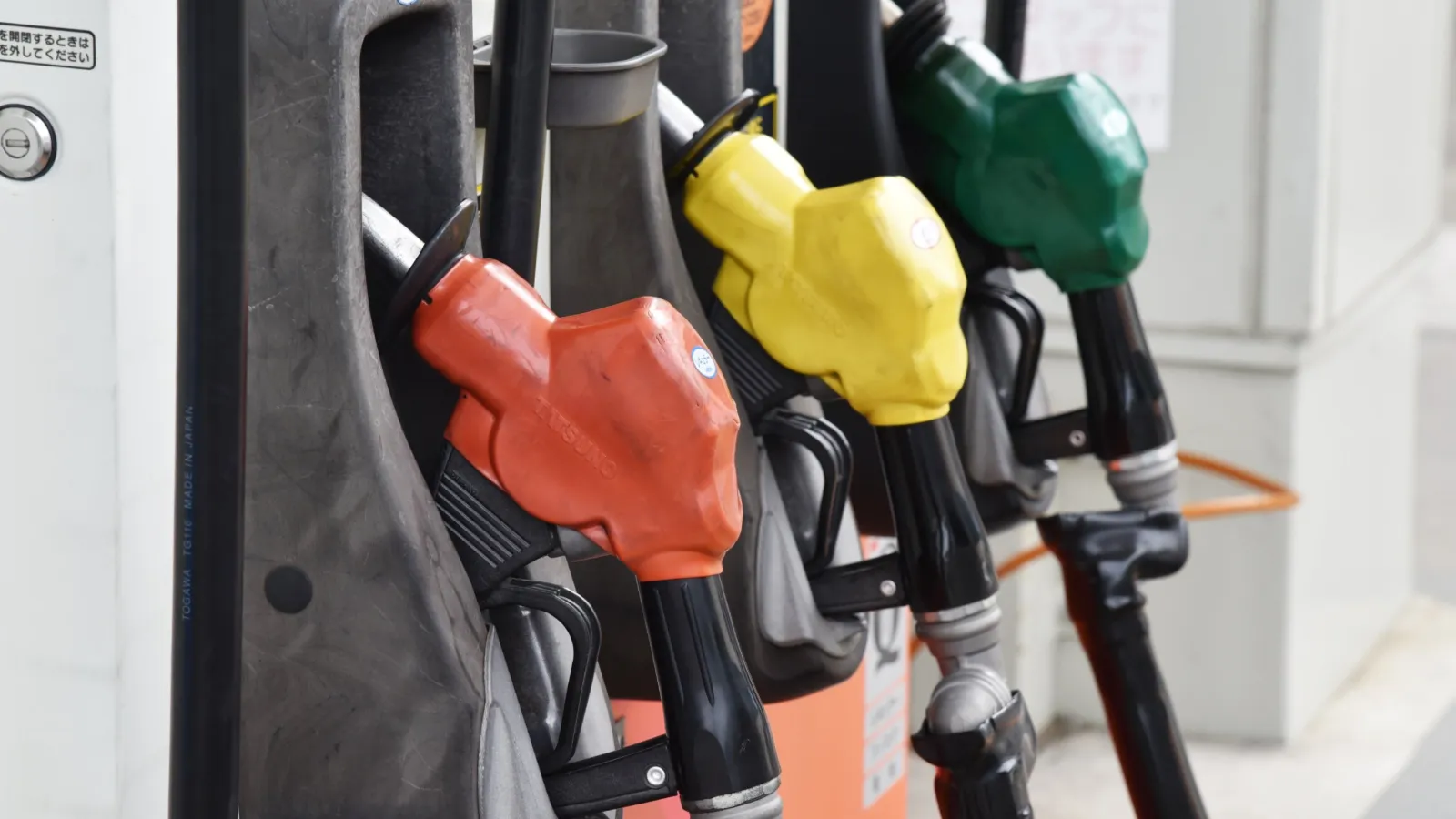
Most stations are self-service: red nozzle for regular, yellow for high-octane, green for diesel.
Parking
Parking is free at most rural sights, michi-no-eki and many ryokan. Expect to pay at popular viewpoints (¥500–1,000), in town centres (coin parking, often ¥300–800 per hour with a daily maximum) and at city hotels (¥1,500–3,000 per night). Street parking is generally not allowed.
Sample budgets
Tolls, fuel and parking only, for a compact car (excluding rental and accommodation). Assumptions: regular petrol at about ¥170 per litre and 12–15 km per litre; tolls are ETC estimates for the routes in our itineraries; parking reflects a mix of free rural car parks and paid hotel and town parking. Figures checked November 10, 2026.
| Trip | Tolls | Fuel | Parking | Total |
|---|---|---|---|---|
| Weekend: Tokyo–Hakone (about 250 km) | ¥4,000–6,000 | ¥3,000 | ¥2,000–4,000 | ¥9,000–13,000 |
| 7 days: Fuji, Alps, Nagano (about 800 km) | ¥15,000–25,000 | ¥9,000–14,000 | ¥5,000–10,000 | ¥29,000–49,000 |
| 14 days: Tokyo to Kyoto (1,300–1,600 km) | ¥30,000–45,000 | ¥16,000–24,000 | ¥15,000–30,000 | ¥61,000–99,000 |
| 1 month: central Honshu and Tohoku (about 3,000 km) | ¥50,000–80,000 | ¥34,000–43,000 | ¥15,000–40,000 | ¥99,000–163,000 |
Accommodation
- Ryokan with dinner and breakfast: from about ¥15,000–20,000 per person per night; much more in famous onsen towns.
- Business hotels: about ¥7,000–15,000 per room, often with parking.
- Holiday rentals and monthly apartments: the best value for stays of a week or more.
Is a road trip cheaper than the train?
For one person on a short trip, usually not. For two or more people, with luggage, rural destinations or a trip of more than a week, a car is often similar or cheaper, especially with a monthly rental, and it gets you to places trains do not reach.
Worked example: two people, one week
Here is a realistic one-week trip for two people in a compact car, following our 7-day itinerary (about 800 km).
| Item | Cost |
|---|---|
| Expressway tolls | about ¥20,000 |
| Fuel (800 km at about ¥11/km) | about ¥9,000 |
| Parking and toll roads | about ¥7,000 |
| Total driving costs | about ¥36,000, or ¥18,000 per person |
For comparison, train and bus tickets for the same route (Hakone, Kawaguchiko, Matsumoto, Kamikochi, Nagano, the snow monkeys and Karuizawa) easily exceed that for two people, and still leave you walking from bus stops with luggage. Add the rental itself: for one week, a daily rental is usually the right choice; from about two weeks, a monthly plan generally becomes the cheaper option.
Paying on the road
- Tolls: ETC is easiest. Cash and credit cards are accepted in the “General” (一般) lanes, but some exits are now ETC-only, so an ETC card is strongly recommended.
- Fuel: credit cards are accepted at most stations, including self-service pumps.
- Parking: many coin car parks take only coins and ¥1,000 notes. Keep cash in the car.
- Rural areas: small restaurants, michi-no-eki stalls and onsen often prefer cash. Withdraw yen at convenience-store ATMs (7-Eleven, Lawson, FamilyMart), which accept most foreign cards.
Money-saving checklist
- Choose the smallest car that fits your group and luggage.
- Compare daily and monthly rental for trips of two weeks or more.
- Get an ETC card and check weekend and regional discounts.
- Use a regional expressway pass in Hokkaido, Tohoku, Kyushu or western Japan.
- Stay several nights per base and take free ordinary roads for day trips.
- Book accommodation with free parking.
- Avoid peak holiday periods, when rental and hotel prices rise.
Frequently asked questions
How much does a road trip in Japan cost per day?
For a compact car, roughly ¥3,000–6,000 a day in tolls, fuel and parking on travelling days, plus rental. Rest days in one base cost very little.
Are tolls really that expensive?
They are higher than in most countries, but predictable. Plan routes with NEXCO Drive Plaza, use ETC and mix in free scenic roads.
Does a monthly rental include insurance?
At Monthly GO, yes: voluntary insurance is included at no extra charge. You still pay a deductible if the car is damaged (for example ¥55,000 if it can still be driven, ¥110,000 if not), unless the optional Collision Damage Waiver (CDW) applies. CDW does not cover single-vehicle accidents. See the insurance and coverage page before you book.
How much does a one-month road trip in Japan cost?
For a compact car covering about 3,000 km, expect roughly ¥99,000–163,000 in tolls, fuel and parking. Add the rental: a 30-day Monthly GO compact is ¥75,900 including tax. Accommodation comes on top and is usually the largest cost after the car.
Related: Driving in Japan Guide
Planning a longer road trip in Japan?
For stays of several weeks or more, a monthly rental can be simpler than booking a new car every few days.
Explore Long-Term Car Rental