Quick Answer
The Izu Peninsula is about 140 km from central Tokyo to Shuzenji (2–2.5 hours) and 180 km to Shimoda (3.5–4 hours). The fastest route is the Tomei or Shin-Tomei Expressway to Nagaizumi-Numazu IC, then the toll-free Izu-Jukan Expressway; the scenic alternative follows the east coast on Route 135 via Atami and Ito. Tolls are roughly ¥3,000–4,000 each way with ETC. Allow three days for a full loop: a car makes it easy to link the Jogasaki coast, Shimoda, the sea caves at Dogashima and onsen towns such as Shuzenji.
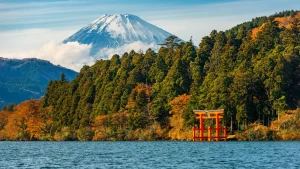
The Izu Peninsula is Tokyo’s favourite coastal escape: a volcanic finger of land with hot springs in almost every town, cliffs and sea caves, white-sand beaches and, from the west coast, Mt. Fuji rising across Suruga Bay. Trains run down the east coast only. The west coast, the mountain centre and most of the best viewpoints are only practical by car, which makes Izu one of the most rewarding road trips near Tokyo.
Izu Peninsula at a glance
| Distance | About 100 km to Atami, 140 km to Shuzenji, 180 km to Shimoda |
| Drive time | 2–2.5 hours to Shuzenji; 3.5–4 hours to Shimoda |
| Fastest route | Tomei or Shin-Tomei → Nagaizumi-Numazu IC → Izu-Jukan Expressway (toll-free) |
| Coastal route | Odawara → Atami → Ito → Shimoda along Route 135 |
| Tolls (one way) | Roughly ¥3,000–4,000 with ETC to Numazu, including the Shuto Expressway |
| Best seasons | February for early cherry blossoms, April–June, September–November |
| Ideal length | 3 days for a full loop, a week to slow down |
How to get to Izu from Tokyo
Through the middle: Izu-Jukan Expressway
Take the Tomei or Shin-Tomei to Nagaizumi-Numazu IC, then follow the Izu-Jukan Expressway south. It is free and bypasses the busy coastal roads, taking you to Izu-Nagaoka, Shuzenji and towards Amagi. This is the fastest way to the centre and the west coast.
Along the east coast: Route 135
From Odawara, Route 135 follows the coast through Atami, Ito and down to Shimoda. It is beautiful but slow, with traffic through the towns at weekends. Drive it one way and use the Izu-Jukan the other.
Check tolls for your date on NEXCO Drive Plaza. Note that most of the peninsula has no expressways: once you are there, it is all local roads.
A three-day Izu coastal loop
Day 1: Atami, Ito and the Jogasaki Coast
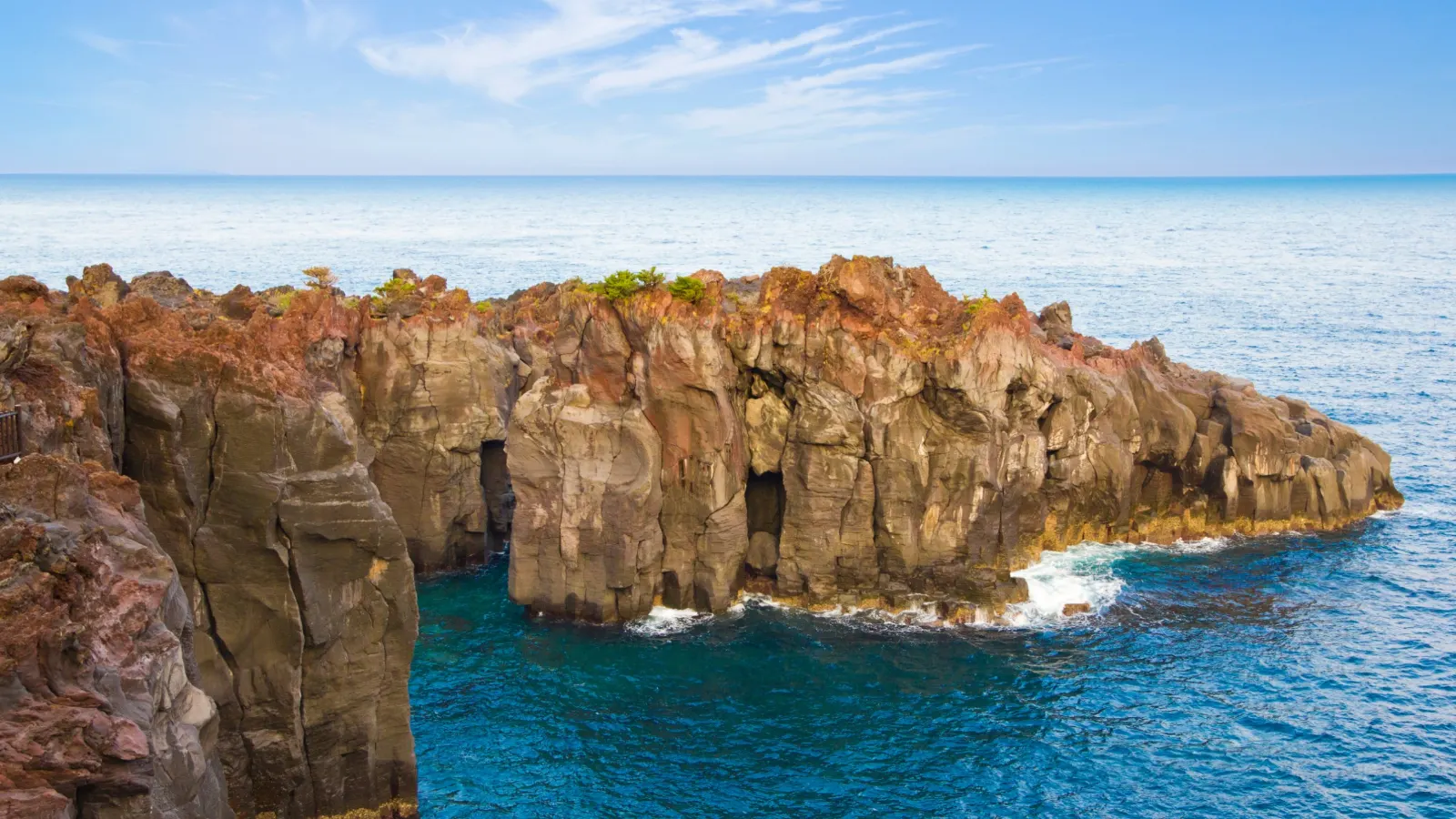
Drive down the east coast. Stop in Atami for the MOA Museum of Art and its view over Sagami Bay, then continue to the Jogasaki Coast near Ito, where a trail runs along black lava cliffs to a 48-metre suspension bridge. In the afternoon, ride the chairlift up Mt. Omuro, a perfectly round grassy volcano. Stay in Ito or the Izu Kogen highlands.
Day 2: Kawazu, Shimoda and the south cape
Continue south to Kawazu, famous for its early-flowering Kawazu cherry trees (usually mid-February to early March) and the Kawazu Seven Waterfalls trail. In Shimoda, walk Perry Road, where Commodore Perry’s “Black Ships” opened Japan to the West in the 1850s, then find a beach: Shirahama and Tatadohama are the best known. End the day at Irozaki Cape at the southern tip. Stay in Shimoda or a cliff-top inn nearby.
Day 3: The west coast and Mt. Fuji views
The west coast is quieter, wilder and only realistic by car. Pass through Matsuzaki, with its old black-and-white namako-kabe walls, to Dogashima, where boat tours enter sea caves (one has a skylight in its roof). At low tide you can walk across a sand bar to Sanshiro-jima island. Drive north along the coast or up the Nishiizu Skyline to the Daruma-yama viewpoint for Mt. Fuji across Suruga Bay, then return via Shuzenji and the Izu-Jukan.
More places worth a detour
- Shuzenji Onsen: a riverside hot spring town with a bamboo forest path and a 9th-century temple.
- Joren Falls and the Amagi Pass: wasabi fields and a waterfall in deep cedar forest on the road between north and south Izu.
- Heda: a fishing village known for giant spider crab (takaashigani), with Fuji views over the harbour.
- Numazu port: fresh seafood rice bowls at the market on your way in or out.
- Mishima Skywalk: a long pedestrian suspension bridge facing Mt. Fuji, on Route 1 between Mishima and Hakone.
Where to stay in Izu
- Atami: big resort hotels, close to Tokyo, lively at night.
- Ito and Izu Kogen: onsen hotels, auberges and holiday rentals among the trees.
- Shimoda: beach hotels and seaside ryokan; the base for the south.
- Shuzenji: traditional inns; good for a central base.
- West coast (Toi, Dogashima, Matsuzaki): smaller inns, sunsets over the sea, fewer crowds.
Many ryokan serve dinners built around local seafood: kinmedai (splendid alfonsino) is the Izu speciality.
Driving tips for Izu
- Weekend traffic: Route 135 and the roads into Atami and Ito are slow on Saturday mornings and Sunday afternoons, and in summer beach season.
- Narrow coastal roads: The west coast road has blind curves and steep sections. Take it slowly and use the passing places.
- Parking: Beaches charge for parking in summer (often ¥1,000–2,000 per day). Popular sights such as Jogasaki and Dogashima have paid lots.
- Fuel: Fill up before the west coast and the Amagi area, where stations are few and close early.
- Weather: Typhoons can close coastal roads from August to October. Check forecasts before you set off.
How much does an Izu road trip cost?
| Item | Typical cost |
|---|---|
| Expressway tolls (round trip) | ¥6,000–8,000 |
| Fuel (about 400–500 km) | ¥5,000–6,500 for a compact car |
| Parking, boats and sights | ¥2,000–4,000 per day |
| Seaside ryokan with meals | From about ¥18,000 per person per night |
Details in the Japan road trip cost guide.
Combining Izu with Hakone and Fuji
Izu sits next to Hakone (about an hour from Atami) and the Fuji Five Lakes (about two hours from Shuzenji), so the three make a natural week-long loop. If you would like a slower stay, renting a house by the sea for a few weeks is a popular way to experience Izu, and a long-term car rental makes that practical.
Frequently asked questions
Can I visit Izu without a car?
Yes for the east coast: trains run from Tokyo to Atami, Ito and Shimoda. The west coast, the mountains and most viewpoints are difficult without a car.
How many days do I need for Izu?
Three days for a full loop at a comfortable pace. One day is enough for Atami and Ito only.
When are the Kawazu cherry blossoms?
Usually from mid-February to early March, a month or more before the main cherry blossom season. Traffic into Kawazu is heavy at weekends during the festival. See our cherry blossom road trip for more.
Is the Izu-Jukan Expressway really free?
Yes, it is toll-free, which makes the drive into the centre of the peninsula cheaper than the coastal toll roads.
Related: Driving in Japan Guide
Planning a longer road trip in Japan?
For stays of several weeks or more, a monthly rental can be simpler than booking a new car every few days.
Explore Long-Term Car Rental