Quick Answer
In Japan's snow country (Hokkaido, Tohoku, Nagano, Niigata, Gifu and the Sea of Japan side), roads are regularly snowy and icy from roughly December to March. You need studless winter tyres, should carry chains for sections under chain regulations, and are safer in a 4WD car; many high mountain roads close for the season. Confirm winter tyres and chains when you book, because they are often optional for cars rented around Tokyo. If you have never driven on snow, choose the Pacific coast, Izu or the Fuji area and avoid Hokkaido and high passes.
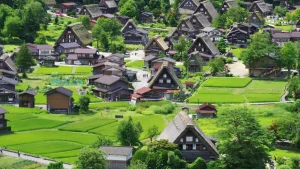
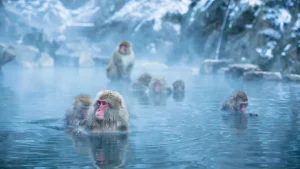
Winter is when Japan’s snow country is at its most beautiful: villages buried under metres of snow, steaming outdoor baths, monkeys in hot springs and frost-covered trees on the mountain tops. It is also when driving needs the most care. With the right car and a realistic plan, a winter road trip is entirely doable, and it reaches places that are hard to visit any other way.
Winter driving rules you must know
Winter tyres
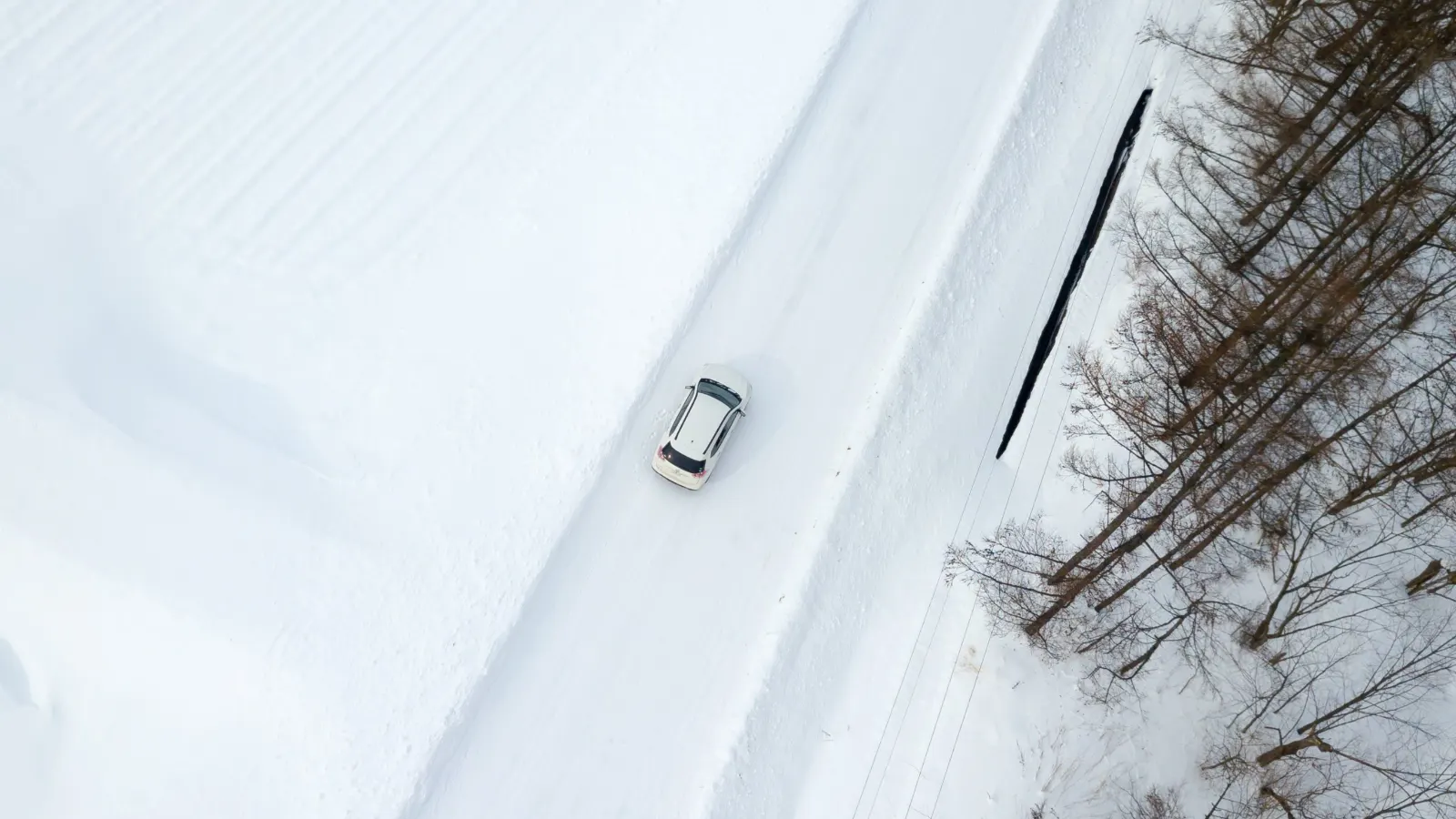
From roughly December to March, roads in mountain and snow-country areas (Hokkaido, Tohoku, Nagano, Niigata, Gifu and the Sea of Japan side) are regularly covered in snow and ice. Driving on snowy roads with summer tyres is prohibited under prefectural rules and is extremely dangerous. Ask your rental company for studless winter tyres; they are standard in Hokkaido and Tohoku but often optional around Tokyo.
Chain regulations
During heavy snow, the authorities can enforce chain regulations on designated sections of expressways and national roads, usually on steep mountain passes. When they apply, every vehicle must fit tyre chains, even with winter tyres; police and road staff check at the entrance. Carry chains, practise fitting them once in a dry car park, and check road information before crossing major passes. Ask how your rental company handles chain damage: at Monthly GO, damage caused by fitting or using chains is not covered by its compensation or damage waiver.
Road closures
Many high mountain roads close completely from November to April, including the Shiga-Kusatsu Road, the Bandai-Azuma Skyline and the Fuji Subaru Line above a certain point. Navigation apps do not always know this. Check closures before planning a route.
How to drive safely on snow and ice
- Slow down and double your distance. Braking distances on ice can be several times longer.
- Avoid sudden movements. Brake, accelerate and steer gently.
- Watch for black ice on bridges, in tunnel exits, in shaded sections and early in the morning.
- Use a low gear downhill rather than relying on the brakes.
- Keep the tank at least half full in case of long delays or road closures.
- Lift your wipers when parking overnight in snow, as local drivers do, so they do not freeze to the windscreen.
- Plan short days. Allow up to 50% more time than in summer, and avoid driving unfamiliar mountain roads after dark (it is dark by 5 p.m.).
- Know when not to go. If a heavy snow warning is issued, stay put. Japanese expressways sometimes close during storms, and people have been stranded for many hours.
Choosing the right car
- 4WD is strongly recommended for snow country and ski resorts.
- Studless winter tyres and chains should be confirmed when you book, not at the counter.
- Ski racks or a larger car if you are carrying gear; a car means you can stay in quieter villages and ski different resorts.
- For a ski season or a long winter stay, a long-term car rental equipped for snow is usually cheaper than weeks of daily rentals.
The best winter road trips
Nagano: snow monkeys, onsen villages and the Alps
The classic winter route from Tokyo. Watch the macaques bathe at Jigokudani, stay in the old onsen towns of Shibu and Yudanaka, ski at Shiga Kogen, Nozawa Onsen or Hakuba, and visit Zenko-ji temple in Nagano city. The Joshin-etsu Expressway is well cleared, but snow is heavy around Nagano. See Tokyo to Nagano by car.
Gunma: Kusatsu Onsen
One of Japan’s most famous hot spring towns, about three hours from Tokyo. The steaming Yubatake in the town centre is spectacular in the snow. Roads into Kusatsu are snowy all winter; the pass to Nagano (Route 292) is closed.
Tohoku: snow monsters and silver-mine onsen
In Yamagata, the trees on Mt. Zao freeze into “snow monsters” (juhyo), at their best from late January to February and lit up at night. Ginzan Onsen, with its wooden inns along a snowy river, restricts cars: park at the designated lot and take the shuttle, and note that evening access for day visitors is limited in winter. NEXCO’s Tohoku Expressway Pass for overseas visitors is sold for set seasons, so check whether it is on sale for your dates.
Hokkaido: for experienced winter drivers
Powder snow at Niseko and Furano, drift ice on the Sea of Okhotsk and frozen lakes. Hokkaido roads are well maintained but whiteouts and black ice are common, distances are long and temperatures fall below -20°C inland. Only recommended if you have real winter driving experience. The Hokkaido Expressway Pass, when on sale, offers flat-rate expressway use (see JNTO).
Snow-free winter drives
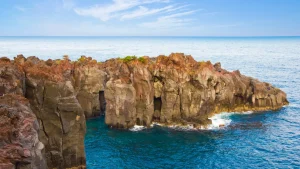
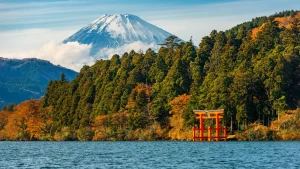
Prefer clear roads? Winter is also the best season for coast drives near Tokyo: the Izu Peninsula (with early cherry blossoms in February), the Boso Peninsula, and Mt. Fuji views from Hakone and the Fuji Five Lakes, where skies are clearest. Fuji and Hakone can still be icy in the early morning, so winter tyres are wise there too.
A five-day Nagano and Gunma snow loop
- Day 1: Tokyo to Kusatsu Onsen via the Kan-etsu Expressway (about 3 hours). Evening at the Yubatake and a public bath.
- Day 2: Kusatsu to Karuizawa (lunch), then the Joshin-etsu Expressway to Nagano city and Zenko-ji. Stay in Nagano or Obuse.
- Day 3: Jigokudani Monkey Park in the morning (wear snow boots for the 30-minute path), then stay in Shibu Onsen.
- Day 4: Nozawa Onsen: ski, or simply walk between its 13 free public baths.
- Day 5: Return to Tokyo on the Joshin-etsu and Kan-etsu Expressways, leaving early in case of snow.
What it costs
Winter tyres and 4WD often add a supplement to the rental price. Tolls and fuel are similar to other seasons, but fuel consumption rises in the cold. Ski-resort accommodation is highest over New Year and in February. See the Japan road trip cost guide.
Frequently asked questions
Is it safe for foreigners to drive in Japan in winter?
Yes, with winter tyres, chains, a 4WD car and a cautious plan. If you have never driven on snow, start with the coast or the Fuji area and avoid Hokkaido and high passes.
Are winter tyres included in rental cars?
In Hokkaido and Tohoku, usually yes. Around Tokyo, often only on request and for an extra fee. Always confirm in writing.
What happens if a chain regulation is in force and I have no chains?
You will be turned back at the checkpoint. Carry chains whenever you plan to cross mountain passes in winter.
When does the snow season end?
On the coasts, there is rarely snow at all. In the mountains, snow usually stays on the roads until late March, and on high passes into April and May.
Related: Driving in Japan Guide
Planning a longer road trip in Japan?
For stays of several weeks or more, a monthly rental can be simpler than booking a new car every few days.
Explore Long-Term Car Rental