
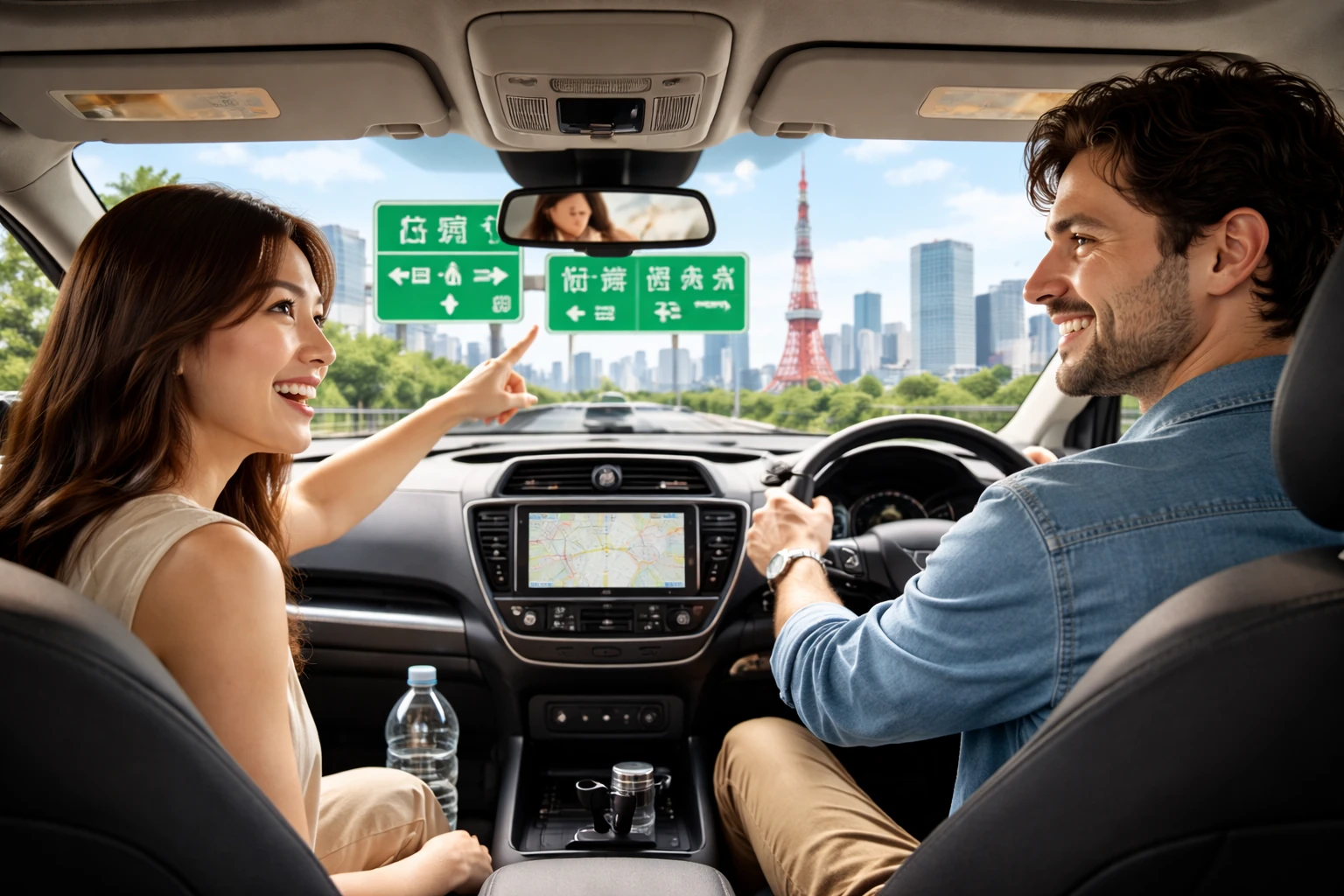
Japan’s roads can feel unfamiliar at first — especially if you’ve never driven in a left-hand traffic country, navigated a Japanese expressway, or encountered the country’s specific road etiquette. But with a bit of preparation, driving in Japan is manageable and, for many visitors, surprisingly straightforward.
This guide covers the practical essentials for foreign drivers in Japan: rules of the road, expressway basics, what to expect in cities versus rural areas, and how to prepare before you get behind the wheel.
Drive on the Left
Japan drives on the left side of the road, with the steering wheel on the right. If you’re from the UK, Australia, or other left-hand traffic countries, this will feel natural. If you’re from the US, Canada, continental Europe, or most other parts of the world, give yourself time to adjust — particularly at intersections and when merging.
The adjustment is usually quicker than people expect. The first hour or two of driving tends to be the most demanding — after that, most drivers settle in.
Speed Limits in Japan
Speed limits in Japan are generally lower than in many Western countries:
- Residential and urban roads: typically 30–40 km/h
- National roads: typically 50–60 km/h
- Expressways: typically 80–100 km/h (some sections up to 120 km/h where posted)
Speed cameras and police enforcement are present throughout Japan. Driving significantly over the posted limit carries serious penalties, including fines and potential license suspension.
Alcohol and Driving: Zero Tolerance
Japan has a strict zero-tolerance policy for drink driving. The legal blood alcohol limit is extremely low — effectively, any detectable level of alcohol can result in prosecution. This applies not just to the driver but in some circumstances to passengers who knowingly allowed a drunk driver to operate a vehicle.
If you plan to drink, do not drive. This is non-negotiable in Japan.
Expressways and the ETC System
Japan’s expressway network is extensive and generally well-maintained, but tolls apply on most routes. The electronic toll collection system is called ETC. Vehicles equipped with an ETC unit and card can pass through dedicated lanes at highway speed without stopping. Without ETC, you pay cash at manual tollgates — slower and less convenient.
If you’re renting a car long-term, ask your provider whether an ETC unit is installed and how to obtain an ETC card. It makes expressway driving significantly easier, especially for regular commuters or travellers.
Parking in Japan
Parking in Japanese cities, particularly Tokyo, is limited and can be expensive. On-street parking is often restricted or prohibited, and enforcement is active. Paid car parks (コインパーキング) are common and usually straightforward to use — most accept cash and some accept cards or IC cards.
If you’re renting a car for daily use in central Tokyo, factor in the time and cost of parking as part of your overall transport planning.
Navigation: Using GPS and Apps
Most rental vehicles in Japan come with a built-in navigation system, though the interface may be in Japanese. Google Maps works well in Japan and is widely used by foreign drivers — it handles Japanese roads accurately, including expressways and toll route options.
For expressways, navigation apps will typically offer route options that include or avoid tolls. Having a smartphone mount in the vehicle and a data-enabled SIM card makes navigation significantly easier.
Road Signs in Japan
Japan uses international road sign conventions for many signs, so the shapes and symbols will be recognisable. However, text on signs is often in Japanese only, particularly on local roads. On expressways and major national roads, English signage is more common — especially near major cities and at toll gates.
Before your trip, familiarise yourself with the most common Japanese road signs. A short reference guide is worth having, particularly for your first few days.
Documents to Carry
Always carry the following when driving in Japan:
- Your original national driving license
- Your International Driving Permit (1949 Geneva Convention) or certified Japanese translation
- Your passport
- Your vehicle rental agreement or registration
→ First-time users: documents and preparation
Planning a Long-Term Stay? Consider Monthly Car Rental
If you’re in Japan for a month or more, a monthly car rental gives you reliable, insured transportation without the complexity of leasing or the cost of repeated short-term bookings. Monthly Go serves the Greater Tokyo area — including Tokyo, Kanagawa, Chiba, and Saitama — with English-language support and vehicle delivery available.
→ View vehicles and pricing
→ Contact Monthly Go
Frequently Asked Questions
Is driving in Japan difficult for foreigners?
Most foreigners find driving in Japan manageable with some preparation. The main adjustments are driving on the left, lower speed limits, and understanding the expressway toll system. Cities like Tokyo require more patience due to traffic and parking.
What side of the road do you drive on in Japan?
Japan drives on the left, with right-hand drive vehicles. This is the same as the UK, Australia, and several other countries.
Can I use Google Maps for driving in Japan?
Yes. Google Maps works reliably in Japan and is widely used by foreign drivers. It handles toll routes, expressways, and most local roads accurately.
What is the speed limit on Japanese expressways?
Most expressways have speed limits of 80–100 km/h, with some sections posted at up to 120 km/h. Always observe posted signs — enforcement is active.
Is parking expensive in Tokyo?
Parking in central Tokyo can be costly, particularly in commercial areas. Coin parking lots (コインパーキング) are widely available. Factor in parking costs when planning your routes in the city.